
Our feeblest contemplations of the Cosmos stir us — there is a tingling in the spine, a catch in the voice, a faint sensation, as if a distant memory, of falling from a height. We know we are approaching the greatest of mysteries.
-Carl Sagan
Our feeblest contemplations of the Cosmos stir us — there is a tingling in the spine, a catch in the voice, a faint sensation, as if a distant memory, of falling from a height. We know we are approaching the greatest of mysteries.
-Carl Sagan
“I’m afraid I can’t be counted among those who’ve latched onto the Goddess as a politically correct alternative to God the Father. The Transcendent Principle–the Divine, if you will–is no more wholly female than it is wholly male.
“To be sure, the Divine has feminine aspects and masculine aspects, but its cumulative aspects transcend gender and, indeed, are so far beyond definition or description that they can’t even be rationally discussed.
“It’s the Mystery, baby, and the Mystery is ultimately unknowable. We can interface with it, we can marvel at it, we can connect to it and be elevated by it, but we can never comprehend it.
“What really interests me about the Goddess is the fact that while she was beloved and honored by our ancestors, was the central spiritual archetype and prevailing deity all over the globe for thousands of years, she has been so successfully eradicated by revisionist patriarchal spin doctors that most modern Christians, Moslems and Jews are totally ignorant of her massive and dominant historical presence.
“If someone or something of that enormous scope can be so thoroughly concealed from the masses, it can’t help but call into question everything we’ve been taught by our various institutions.
“The subversion and repression of the Goddess is the Big Lie of the past two millennia — and as the dumbing down of America gains momentum, the duplicity is strengthening its grip.
“The good news is that a significant minority has recently become informed about the Goddess, and that has both revealed the essential spiritual foundation of feminism and inspired a growing distrust of traditional dogma and the meatballs who’ve propagated it.”
–Tom Robbins
This year, Bean has discovered a show called Octonauts. She passionately loves this show, and most particularly enjoys pretending to be the intrepid pirate cat named Kwazii. The Octonauts are undersea explorers who help aquatic life in trouble and learn about the ocean. So when I asked if she wanted to be Kwazii for Halloween, she replied enthusiastically. And so here she is:

The eye patch is supposed to be solid, but she felt unnerved with sight in only one eye, so I improvised! I think I had as much fun making and assembling the Kwazii costume as she will wearing it! I bought orange long underwear and the boots, but everything else is my creation. Happy Halloween!
Updated a bit later: And here I am, a gypsy queen!

If embedding isn’t working, view it here.
I worry he is right. Don’t let him be right in this.
The most beautiful thing we can experience is the mysterious. It is the source of all true art and science. He to whom this emotion is a stranger, who can no longer pause to wonder and stand rapt in awe, is as good as dead: his eyes are closed. This insight into the mystery of life, coupled though it be with fear, has also given rise to religion. To know that what is impenetrable to us really exists, manifesting itself as the highest wisdom and the most radiant beauty which our dull faculties can comprehend only in their most primitive forms— this knowledge, this feeling, is at the center of true religiousness. In this sense, and in this sense only, I belong in the ranks of devoutly religious men.
I cannot imagine a God who rewards and punishes the objects of his creation, whose purposes are modeled after our own—a God, in short, who is but a reflection of human frailty. Neither can I believe that the individual survives the death of his body, although feeble souls harbor such thoughts through fear or ridiculous egotism.
It is enough for me to contemplate the mystery of conscious life perpetuating itself through all eternity, to reflect upon the marvelous structure of the universe which we can dimly perceive, and to try humbly to comprehend even an infinitesimal part of the intelligence manifested in nature.
Mine, all mine!
At preschool, Bean had a tendency to hurtle into tears if a small thing didn’t go her way, or if she perceived some other child’s behavior as a slight. My response typically had been to croon, hug, and comfort. For instance, one day she brought a stuffed animal with her. In circle time we sing hello to everybody. When we sang hello to her and went on to the next child, she wanted us to sing hello to her animal. When we didn’t, she was more than crestfallen; she was crushed. She burst into sobs, got up, and came running to me.
Bean worried a lot about the other kids not liking her. She thought they might laugh at or make fun of her. (At this age, the kids are only just starting to play together, and she was worried about that?) She was moody. She wanted to control and direct the story of all the pretend play with other kids (and Mommy and Daddy). On the days I was working at the school, she wanted all of my attention. Especially when it came time for me to be in parent discussion.
I began to feel less like a mother and more like her pawn. The neediness in her was insatiable, and her behavior more like a tyrant. I talked with her teacher about it, and she suggested I back off a little. As an example, she talked about the day we didn’t sing hello to her animal. The teacher said, “Your response was to cuddle and reinforce the sadness. But another way to respond is to say, ‘That’s just not what we do here! We sing hello to the students, not all their toys!’ And to help her to lighten up and see it isn’t a big deal.”
And that’s when I realized something. I was teetering on the brink of overcompensating for my own childhood. Not every occasion of disappointment requires deep empathy. Part of my duty as a mother is to prepare Bean to ride with changes, to be flexible. I also had not realized how frightening it must be for Bean to have as much power over me as she did. When she was a baby, she needed all of me, and I gave it. What she needs now, as she moves into the world, is to need less of me. So I began to set more boundaries on what she could have of me. One day she forgot a toy in the car that she wanted for show and tell; it had been her task to remember. When I would not take her back to the car to retrieve it — since we’d gotten to class — Bean gave a world-class demonstration of temper. But I held firm, and she survived and learned a lesson about responsibility.
I continued to heed the teacher’s words that “what you pay attention to grows” and gave more attention to joy than sorrow. Remarkably, within a couple of weeks I, the teacher, and other parents noticed a significant change. Bean began to play with the kids more and less by herself. She participated more in circle time, singing and dancing. She didn’t intrude on me during discussion and instead after snack said, “Bye Mom!” and went outside to play for the last hour. She didn’t attempt to check on me, to get my attention or tell me “something important.”
To sleep, perchance…
When Bean turned three she attempted to stop napping. Her doctor expressed concern about this, because, she said, three-year-olds still really do need a nap. It was true. Bean only slept 9-10 hours at night, and I could see she benefitted from her naps. After a week of refusing to nap, Bean was falling over with exhaustion and emotionally explosive. She also got really sick with a high fever the day before we took a big trip.
Doctor suggested I offer incentives, e.g., “If you nap, you can watch a show after.” (Or whatever special treat might work for Bean.) The bribe of extra t.v. worked until it didn’t — about one week. I tried quiet time, during which she wouldn’t fall asleep but would rock and listen to music for an hour, but this still didn’t provide her the rest she needed. So I returned to the way we handled naps for the first seven months of her life. I rocked her, sang to her, and held her for the duration of the nap, dozing with her.
This worked well. We had preschool two afternoons a week and it was clear those took a toll, but over the school year her stamina increased. And with the steady increase of stamina came the resistance to nap again. I was able to override her refusal most of the time, sometimes by cajoling, other times by threatening (I’ll leave the room and close the door).
When I went away for my getaway weekend, Bean didn’t nap, of course. And when I returned, I allowed this to remain. She is adjusting. She is slightly more tired during the day than she used to be, but it seems a steady state. Her night sleep has increased somewhat, and the quiet hour rejuvenates us both. Best of all, a new world is opening up, the one where we can be unconcerned about “getting home in time” for the nap window. And rather than a two-hour semi-nap sitting up with a crick in my neck, I get one blessed hour to meditate and read while she rocks and listens to music.
So skinny she hula hoops with a cheerio
In April we took our cat to the vet for a blood test, and Bean happened to step on the huge dog scale for fun. The scale read her weight as 28 pounds. I was shocked. It couldn’t be right! She weighed 29 pounds at her annual visit last September!
I’d always fretted about Bean’s nutrition and eating habits. Except for bologna and hot dogs, she eschewed meat. She refuses all forms of milk: cow, soy, almond, flavored, regular, etc. She doesn’t eat much yogurt or cheese. She eats veggies, but only mostly raw. She eats fruit, but only a certain few. Meals involved me asking her what she wanted to eat and trying to please her. Dinners meant cooking something I knew she’d eat, but her whims changed. For awhile I even fed her separately.
Yet here she was weighing less. So we went to her doctor. I learned she had grown taller — 2.5 inches since last September, and since she hadn’t been gaining her growth curve was a little skewed. Her BMI is 13 (what I wouldn’t give for that). Overall, the doctor wasn’t worried because growth occurred. She suggested I take the PAMF Feeding Your Preschooler class for ideas I might use. I came away with a huge list of food Bean does eat and saw that for the most part she is eating well. I learned that my concept of portion sizes for kids was distorted. I learned that we’d be better served if I quit offering her snacks (even salad veggies) to eat while she watched PBS before dinner.
So I relaxed. We have all meals and snacks at table now. I established a firmer schedule and held to it; if she doesn’t eat snack when it’s snack time and decides she’s hungry before lunch/dinner, she just has to wait. I decide what to offer and she either eats or not. I sit with her for all meals (it’s no fun to eat by yourself). I’ve cooked more foods I like despite knowing she won’t probably eat them. Every meal now has bread on the table along with salad, so she’ll get something in her. And guess what has happened? Bean is trying more foods! She has decided she likes pepperoni pizza (previously only cheese would do), cherries, and breakfast sausage.
This combination of releasing the worry and desire to control and establishing parent-driven meal times and menus has freed us. I do my job: offer healthy foods at appropriate times. She does her job deciding whether and what to eat. Talk at mealtimes now focuses on topics other than food, and “encouragement” to eat more. I don’t think she’s gained weight so far, but I see now that I can relax and accept my little petite Bean and enjoy her. We enjoy each other and our meals more now.
The last step of toddlerhood
I want to keep potty-training stories to a minimum in consideration of Bean’s privacy. Suffice it to say that she’s been ready and resistant for some time, but in part her resistance reflected my own. There have been attempts to use the potty since she was two, but I didn’t push because I feared a power struggle. But last week Bean declared she wanted to wear panties (for the second month in a row, the first being April but she quit after a weekend). And I said okay, and that it meant the changing pad, diaper pail, and all Pull-ups were going away forever. (She hugged her changing pad good-bye.)
The first few days were rocky, and I despaired. But we have persisted, and I’ve devised a way to encourage and reward her daily for her effort and increasing competence. She knows she will be enrolled in swimming lessons now, and that after our trip east she’ll get a “princess bike” she yearns for. For shorter-term rewards, she’s getting smaller things. She wanted pink “tap shoes” (Mary Janes), and so this was her gift for completing one week of using the potty. She also lately pines for “princess bubble bath” and, of all things, an American flag, so her gift for the end of the second week will likely be those. They are small, tangible reinforcements of her success. Not too far in the future I see the sticker chart, small candies, and weekly prizes will fade as this function just becomes a routine in her life.
Momma is all grown up! At least for now, for this age and stage and minute. And Bean? Well, she jumps for joy!


As my husband says, nothing is ever halfway with me. After reading Michael Pollan’s book, In Defense of Food: An Eater’s Manifesto, I’ve wondered exactly how to follow his advice: “Eat food. Not too much. Mostly plants.” I recently purchased a small pile of books, several of which feel intuitively revolutionary to me. The titles:
Green For Life, by Victoria Boutenko: This book explains nutrition in a very accessible manner, providing scientific data and references to studies to support its claims. I am skeptical of a few claims (such as gray hair returning to its natural color after adding green smoothies to one’s diet), but the majority of information makes practical sense and is upheld by general standards of nutrition. The book is concise and printed on high-quality paper.
Green Smoothie Revolution: The Radical Leap Towards Natural Health, by Victoria Boutenko: This second book by Boutenko provides the core information on the benefit of green smoothies. The majority of the book contains recipes (i.e., inspiration for mixing) of smoothies. (It’s also concise and printed on high quality paper, meaning it will hold up over long-term use and doesn’t take up much kitchen shelf space.) In both books, I like the author’s voice. She writes in a way that is educated yet understated.
The Green Smoothie Diet: The Natural Program for Extraordinary Health: I returned this one to the bookstore. It’s a regurgitation of Boutenko’s general ideas (even the title) but without any references to scientific or medical studies. It read an awful lot like a sales pitch for Blendtec, and rather than a bibliography of resources at the end it contained pages and pages of testimonials. While they make for entertaining reading, they are anecdotal, and I’m not going to base my nutrition decisions on the hallelujahs of strangers. The paper was also cheap, the kind that will yellow and grow brittle in a couple of years.
Fresh from the Vegetarian Slow Cooker, by Robin Robertson: while I browsed the shelves, struggling to decide whether to purchase Mark Bittman’s How to Cook Everything Vegetarian (an enormous book and pricey), I came across this one. I use my slow cooker quite a bit. I was pleased to see a book chock full of delicious dishes to make. They can be adapted for vegans as well, although I’m unlikely to ever take that route.
Vegan Unplugged: A Pantry Cuisine Cookbook and Survival Guide, by Jon Robertson: While I just wrote that I won’t become vegan, what intrigued me about this book was its niche — a book specifically written with the question of how to survive if the power goes out for a long time. The book explains how to create a pantry full of goods for the recipes it provides. There are about 17 recipes requiring no cooking at all. Different methods of creating heat (wood, gas stove, sterno) are discussed. There’s also a five-day meal plan for vegans who might drive somewhere; they can bring their own food to the in-law’s (for camping this is good as well). (I once dated a vegan and we had the hardest time finding places he could and would eat.) Most of the recipes sound delicious and are ones I’d make anyhow.
The other day I roasted a whole chicken. I noticed something in my reaction while preparing and later eating it. As I took it out of the wrapper, for the first time it felt a little weird to be handling flesh. Not quite obscene, but a little foreign. Bean asked what it was, and I said it was a chicken. She pointed to the wings and inquired of them; after I answered she laughed and said, “Food with wings! That’s silly!” (Bean is almost vegetarian; the only meat she eats are kosher hot dogs from Trader Joe’s, Oscar Meyer baloney, my pulled pork, the rare fish stick, and an occasional strip of bacon. She refuses milk still but will once in awhile eat cheese or yogurt.)
Anyhow, once the chicken was roasted I was ravenous to eat it. What I wanted and enjoyed the most was the crispy seasoned skin. I ate the meat and it was tasty, but I was satisfied with one portion. The next day I used the meat to add to dinner salads, and while it tasted all right it seemed superfluous. I ate a chicken sandwich today, and again it was all right, but not the tasty concoction I used to salivate over. Now I’m cooking the carcass for soup, but it smells odd to me in the house. It smells like… flesh cooking. It smells slightly revolting. Hmmm.
I wonder what’s up?
Hi dear readers (all 5 of you who are left). I know I hardly post here anymore. But today I have good news to share. The saga of the breast cancer question has been answered. I had the genetic test done for BRCA 1 and 2 (thanks to insurance paying), and the result is I have neither mutation! This is a relief. The oncologist still thinks I should consider taking Tamoxifen because of the family history and atypical hyperplasia I have. I’m not so sure, given the potential life-ending side effects. So for now I am cancer-free and I have options for trying to remain so.
There are other, less toxic avenues I started down. One is to consume green smoothies. I’ve not done much research for scientific findings of the health benefits of green smoothies (particularly regarding cancer prevention), but from so many books I’ve read (Michael Pollan, Mark Bitman, etc.), an increase in consumption of these foods can only promote health.
I don’t have the high-tech blender suggested for this (they are pricey at $400, though I’m told worth it). If I stay the course, maybe I’ll get one. Depends on how many blenders I burn out. The cool thing is that so far the smoothies I make taste good. I’m told some of the greens I might end up using make for a less sweet concoction. But thus far this is the recipe I’m using: two generous handfuls of spinach; 1 small banana; 1 pear; 1 cup grapes. (Or I could go with more pears, no grapes, etc.). About a tablespoon of grade B maple syrup, and 1.5 cups of water. I blend the hell out of it for two minutes.

Voila! A truly tasty beverage (even comes in my favorite color!).

The case is solved. I have NO CANCER!! I have a referral to an oncologist to discuss risk reduction options and to a genetic counselor to discuss testing for BRCA 1 and 2. I’m higher risk but so is living in general. Time to celebrate!
And here’s another craft Bean and I did (since life does go on even while parts of it are stalled):

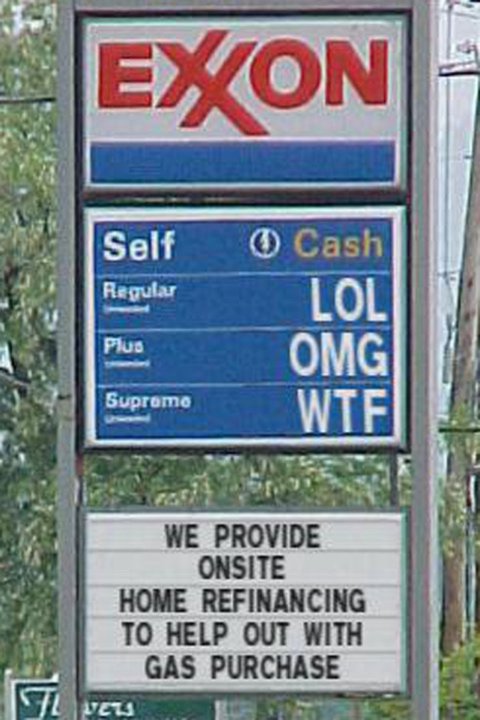
Gas prices have taken off! This made me laugh. I do expect, however, that prices here will reach $5.00 a gallon by mid-2012 at the latest. I’m basing the costs of preschool (and whether to continue commuting to our current one, which is a 34-mile round trip) on this assumption. We shall see!
I met the surgeon Friday. He ran way behind schedule, but he was collaborative and kind. My surgery is scheduled for this Friday, the 11th. I was told to find a front closure support bra that I will wear home from the surgery, which is an outpatient procedure. They will use wire localization to find the titanium piece left from the last biopsy, and then will remove tissue around that the size of a large marble. It may take 90 minutes for this, because they need to x-ray the tissue to see if they’ve gotten enough margin around the chip. If not, they’ll remove more before closing me up.
The follow up visit is set for March 18, and he told me his practice is NOT to give pathology results via phone. But he assured me that there was a 90% chance no cancer would be detected. (Though there had been an 80% chance the stereotactic biopsy wasn’t going to show a problem, but I wasn’t in that group.) He said after we get results, regardless of what they are, I should consult with an oncologist to discuss how to determine my risk and options to reduce it. He also recommended that I talk to a genetic counselor, at least to find out whether it might behoove me to get tested.
I might very well do so. My mother is a breast cancer survivor. Her mother, however, died of breast cancer when she was in her early 50s. And her mother, who lived to her 80s, had breast cancer and ovarian cancer. In fact, I think it was ovarian cancer she died of. I had dismissed my great-grandmother, because one doctor told me years ago that it’s inevitable to die of something when you get old enough, and it wasn’t indicative of a heritable condition. In light of my situation though, I’m now thinking perhaps it is. Three generations of breast cancer — regardless of the age it developed — surely has some significance, at least to me personally.
One of my sisters is worried that if I get the test done and turn out to have a mutation, that this will cause me problems getting insurance coverage later on, if I should change carriers. Fortunately, the Genetic Information Nondiscrimination Act of 2008 (GINA) was passed, which makes it illegal for health insurers and employers to discriminate on the basis of DNA information. You cannot be denied medical coverage based on DNA results. The insurance company may require additional intervention because of it (such as more frequent screenings), but it is not a pre-existing condition. Having a gene mutation does not guarantee an illness will result. So, no worries, sis!
Today I have my surgical consultation for the discovery of atypical ductal hyperplasia. I’ve been waiting two weeks for this to discuss and schedule it. Up until today I’ve carried on normally, but today I’m as tense as an overstretched rubber band.
I haven’t got more to share, although I do have another letter. Bean continues to practice cutting and was able to cut some of the triangles with assistance. I now present the letter t: tools and triangles!

I got a phone call at noon on Thursday with my biopsy results. The news wasn’t the worst, but it’s not the best either. I have Atypical Ductal Hyperplasia. In simplest terms, this means there’s a spot on my breast with too many cells growing in the duct that are taking on suspiciously irregular forms. It’s not cancer, yet. But it’s one stage below Ductal Carcinoma In Situ, also known as DCIS. DCIS is also not considered dire, because it means the cancer is not yet invasive. But neither is a situation in which to sit back and do nothing.
On March 3 I meet with a surgeon, because yet another biopsy is required. This will be an excisional biopsy, I think with general anesthesia; they will remove more tissue for testing. If they find cancer cells, then we proceed from there. If they find nothing, then I will be closely monitored. I plan to ask about taking tamoxifen as a preventive measure. I also plan to seriously consider getting tested for the BRCA1 and BRCA2 gene mutations. (BRCA is a gene known as a tumor supressor. A harmful mutation greatly increases risk.) I believe that having the BRCA1 mutation also puts one at a 20-40% higher risk for ovarian cancer as well. With a family history (my maternal grandmother and my mother had breast cancer), and this condition, I feel like my breasts are a minefield. If carry BRCA1, I’d also consider an oophorectomy (removal of my ovaries).
Lots to consider. Lots of tumultuous feelings.
I’ve got to hand it to Palo Alto Medical Foundation. Almost every encounter I have with them is an interaction of efficiency and compassion, from the desk staff to the doctors. Today I had a stereotactic breast biopsy. That’s where you climb onto a table that’s a cross between a massage table and an auto shop lift, and your breast hangs through a hole, and they put a needle in to pull out suspicious tissue for testing. It’s not a Big Deal, but it’s not how I’d prefer to spend an afternoon, either.
But it was more pleasant than I expected. I checked in 15 minutes early as required. I was seen within 5 minutes, whisked back to a changing room, given a terrycloth robe, and told to wait in a little room chock full of magazines. Shortly I was ushered into the biopsy room.
The room was softly lit overhead (not the interrogation lighting common to such places). There was a 24×36″ photo of a sunset on the Marin Headlands to gaze at. And soft, new-agey music provided background ambiance. If there had been hot towels, aromatherapy, and chimes, I might have fallen asleep. (Not really.) The staff were caring. The physician made a point of talking to me before the procedure about what was coming and held my hand while she did so. The nurse periodically put her hand on my back. At one point I even closed my eyes. Aside from a sting when they put the local anesthesia in, and a little bit of tugging, I felt no sensation. They frequently asked how I was doing. I joked that with a three-year-old at home, it was actually a bit nice to lie still for awhile.
It was over in an hour. They were happy with the sample. They got 99% of the calcifications out and put a teeny titanium marker in the spot in case it turns out to be cancerous and they need to go back. It’s all over except for the results, which unfortunately take time. The earliest I will hear about it is next Thursday, the 17th. I’m a little sore and bruised, but it’s nothing compared to other medical interventions I’ve had.
Until then, I simply don’t have enough information, so I’m not traipsing down any “what if” paths. Yes, I’m a little tense about the unknown, but not in a way that’s ruining the present.
I wrote the following on October 20, before I got ahold of Geneen Roth’s book, Women Food and God.
I like to eat.
I like to eat sweet, salty, and calorie-dense foods.
I eat when I am not hungry.
I eat when I am bored.
I eat when I feel stressed.
I resist the idea of portion control.
I resist the idea of restricting food.
I resist the method of counting calories or WW points.
I eat whatever I want whenever I want.
I want to eat whatever I want whenever I want.
I resist exercise.
I resist sweating.
I enjoy being lazy.
——-
It feels like too much effort to move my body.
It feels like too much effort to lose weight.
It feels like too much effort to finagle my schedule to get exercise time.
——–
Before I met my husband, I exercised a lot and ate better, in part because I was unhappy and avoided being home alone. Exercise was a way of coping. And I could not afford to buy the kind of food I do now, or indulge as I do now.
——–
I ache most days in my joints. I move slowly. I have little core strength and less limb strength. My ability to balance is decreasing.
———
What does it take to get motivated? Do I get healthy for myself, for my mother, for my daughter? What level of self-loathing underlies all this behavior?
——
Reality: My body does not need a high calorie intake because of a) age and b) activity level. Yet calorie-dense foods are EVERYWHERE.
I read Roth’s book in mid-November, and it really didn’t tell me new information. (I do think it useful for someone without a lot of educational background in psychology.) However, I decided to follow her eating guidelines, as listed below:
The Eating Guidelines
- Eat when you are hungry.
- Eat sitting down in a calm environment. This does not include the car.
- Eat without distractions. Distractions include radio, television, newspapers, books, intense or anxiety-producing conversations or music.
- Eat what your body wants.
- Eat until you are satisfied.
- Eat (with the intention of being) in full view of others.
- Eat with enjoyment, gusto and pleasure.
I’ve also been getting on the bike nearly every day for about 30 minutes. It’s boring. I almost loathe it. But about seven minutes into the routine I hit my stride and resistance goes away (though I’m still bored), and by the end I feel really great. It gives me more energy and I feel stronger. I realized, too, that I would often eat in anticipation of future hunger. In other words, I would eat when not hungry before we left the house, because I figured we might not have time to get food while we were out, and I’m cranky when I’m hungry. And I wouldn’t think much about what I ate.
Once I began to pause and really feel what my body felt hungry for, I started choosing more vegetables and fruits and less peanut butter. Though, at times, I have to really pay attention to discern what my body wants versus what my taste buds want. Once I began to focus more on taste and texture, I began to feel satisfied sooner and my portions reduced. I eat sweets (a cookie or two, a bit of toffee) and enjoy the “just right” amount.
So what has happened in the past month? I’ve lost 11 pounds. It feels good. We’ll see if the weight continues to come off. My life feels less fraught with frustration at myself.
Today Bean asked, “What is a symbol?”
I tried to answer. A symbol is a small picture that represents a thing that has a certain meaning. The letter T for the “t” sound, for example. Words are symbols. A red light is a symbol, telling people to make their car stop at it, while a yellow light means to slow down and a green one to go. A logo — like the eagle on the side of the mail truck — is a symbol for the company that is called the U.S. Postal Service. A picture of a heart means love. Candy canes are symbols for Christmas.
Then she asked, “What is the symbol for the universe?”
Wow! I told her there are many symbols — religious ones, scientific ones, artistic ones — but that the universe was sooooooo big that no one symbol can completely show what the universe is or means.
That seemed to satisfy her for that moment. More stuff for that growing brain to think about!

Back in 2004, when my father-in-law was gravely ill, I happened across a book that I was compelled to buy: The Grace in Dying: How We Are Transformed Spiritually as We Die, by Kathleen D. Singh. I began to read it, and in the introduction the author suggested that if the reader was in the process of dying or reading this because a loved one is dying, to do the following: know that you are safe, all is well, and put the book down.
I took her advice. Four months later my father-in-law died, and I was with him for his last week nearly 24/7. It was a daunting, draining experience. I watched him take his last breath. In the process of his dying, it occurred to me that it seemed much like a labor. And having had a child since, I know it is indeed labor. But what, I wonder, is in the process of happening? Is dying just dying? The lights simply go out? What happens to the entity called “me, myself, or I”; is it really annihilated?
Or is it a transition, a birthing into something else?
I was raised religiously and have traversed a varied spiritual path. In recent years I’ve applied the term “atheist” to myself, though “agnostic” is probably more accurate. I do not need “god” as humans are able to articulate the term; I believe the universe is marvelous, and science is a way to explore it all, and isn’t that miracle enough? I am drawn to Buddhism, particularly Zen Buddhism, although I have not become a practitioner yet.
However, I did have a remarkable experience back in 1996 that at the time, I believed (as much as I could believe, which was really a process of trying to convince myself to believe) was the Holy Spirit. When I left the Christian religion (for the second time in my life), I categorized the experience as an anomaly, as an experience of self-hypnosis or psychological wish fulfillment.
I was a member of a conservative, bible-based, fundamental Christian church. The story behind the path that led me to that after years of atheism can be read here. Anyhow, one Saturday evening I remained after service. It was common for members to remain and pray with each other. This was a church where people sometimes experienced the “baptism of the Holy Spirit,” evidenced sometimes by people speaking in tongues (seeming to babble) and being filled with the Spirit, evidenced by joyous, continuous laughter. Not hysterics, not banshee laughing, just a robust laugh as one would do watching a funny show.
One evening a woman sat on the floor experiencing this laughter. I observed awhile, curious. Another woman came over and asked, “Would you like to join and be filled with the Holy Spirit?” I answered yes, but expressed a worry that it wouldn’t “take.” She said, “Just trust. Let thoughts and worries go and just be with whatever is.”
I sat next to the spirit-filled woman, put my hand on her arm, closed my eyes, and waited. To my wonder, I felt a tingling warmth from her enter my hand and flow up my right arm into my body. Whatever words I summon to describe the experience won’t do it justice, but here goes: As I was filled with this feeling, I felt light, both weightless and incandescent. I began to feel a laugh bubbling up in me. I allowed it to come forth. I sat for however long, bathed in this energy, laughing gently, feeling joy. At the same time, I also felt a part of me was still there, observing. I was not generating or creating this. Nothing was forced by me. At the same time, I did not feel “possessed” or taken over; I still felt I had agency. It was an experience unlike anything I’ve known before or since.
At some point I felt satiated, full, and decided I was done. I removed my hand from the woman’s arm and opened my eyes. I felt new. I felt connected, united with myself and with everything. As I walked, my feet connected in a way that felt like I was the earth and the earth was me. I had a feeling of well-being, life, and love. This feeling remained with me for many hours. After the night’s sleep, it had dissipated. I did not seek this encounter again, and one year later I came to terms that I did not agree with aspects of this church’s dogma and no longer wanted to pretend I did. But I remembered this experience and cherished it awhile.
Then life happened, and the incident faded. Whenever I thought about it, I lumped it in the “I’m not certain what that was but it probably wasn’t real” category. Except… it felt real, and it still resonates like an authentic experience, an encounter with the energy that makes up the universe. While I don’t believe in an anthropomorphic god, I do believe there is something that makes the universe go, something science does not explain completely yet, that it is real, we are made of it, and that we can access a connection with it. (As Carl Sagan said, “We are star stuff.”)
And now I have reopened Kathleen Singh’s book to face the question of dying, of what it’s about and what might follow. The experience I had in 1996 was a glimpse. My hunch is that this connection is possible, is accessible via meditation practice over many years, and that it is our destination at the moment the body dies. As I read her book I will process some of my reactions here.
Poor Bean. She has pneumonia again. This time, besides the antibiotic, we have been prescribed an Albuterol breathing treatment to give via mask every four hours until the follow-up visit on Thursday morning.
Here’s hoping it’s not asthma she is developing…
Husband is sick too with a cold. Where’s the vitamin C?? I should bathe in it.
My mom sent the link to this video. It’s fun, and sweet. If the embed doesn’t work, click this link.
I haven’t been at the computer much. Decorating, and more decorating, and herding a child through our days.
I wanted contrast and intensity. I had random scraps. This is what came together!

A mesa is an isolated, flat-topped hill or mountain with steep sides that is smaller in area than a plateau. A butte is also a flat-topped hill with steep sides, though smaller in area than a mesa. Definitions of the surface areas of mesas and buttes vary. One source states that a mesa has a surface area of less than 4 square miles (10 square kilometers), while a butte has a surface area less than 11,250 square feet (1,000 square meters). Another source states that the surface area of a mesa is larger than 1 square mile (2.59 square kilometers); the surface area of a butte is smaller than that dimension. Some simply define a mesa as a landform that is wider than it is high and a butte as one that is higher than it is wide.
There’s your science factoid for the day.