When we’re young we have faith in what is seen, but when we’re old we know that what is seen is traced in air and built on water.
–Maxwell Anderson, Winterset


When we’re young we have faith in what is seen, but when we’re old we know that what is seen is traced in air and built on water.
–Maxwell Anderson, Winterset
To sit without emotion, hope or aim,
In the loved presence of my cottage fire,
And listen to the flapping of the flame,
Or kettle whispering its faint under song.–William Wordsworth

A small speckled visitor
Wearing a crimson cape.
Brighter than a cherry
Smaller than a grape.A polka-dotted someone
Walking on my wall.
A black-hooded lady
In a scarlet shawl.–Joan Walsh Anglund

When the first baby laughed for the first time, its laugh broke into a thousand pieces, and they all went skipping about, and that was the beginning of fairies. And now when every new baby is born its first laugh becomes a fairy. So there ought to be one fairy for every boy or girl.
–James Matthew Barrie

True silence is the rest of the mind; it is to the spirit what sleep is to the body, nourishment and refreshment.
–William Penn

Back last summer, Bean started making comments about skin color. I said a word in Spanish to her, and she sharply rebuked me: “Don’t say Spanish. Pink people don’t speak Spanish!” I was taken aback. I asked her what skin color people have who speak Spanish, and she replied “Brown skin.” I pointed out that her Aunt Kristen and cousin Penelope speak Spanish very fluently, and they have pink skin. I also pointed out that our friends Sharon, Edu, Torben and Sonia speak German as well as English, and that people of all different skin colors speak different languages.
Still, I found the intensity of her response a little unsettling.
Then, last October, I wrote the following to her preschool teacher as well as to my mentor, Karen, because Bean had ramped up her opinions:
I’m looking for your reflections on a recent development in Bean. She is beginning to sort and classifying things, and in the past few months this has extended to people’s skin color. I’ll share some examples and how we’ve responded. I’m wondering if there is something “more” we could/should do.
Last year in school there were a majority of darker-skinned kids in class — Indian, Chinese, Pakistani, etc. Sometimes Bean said she worried kids would laugh at her because she had the wrong color hair and skin. She played well in general, but this was an occasional comment.
During summer we were doing a craft and I said “por favor” to her. Bean said: “Don’t speak Spanish! Pink people don’t speak Spanish.” I asked her who does, and she replied “brown people.” I reminded her that her Aunt Kristen and cousin Penelope speak Spanish and they are very pink (Caucasian), and also she has other friends who are brown-skinned and speak German. People can speak all types of language. (She has, by the way, taken Let’s Play in Spanish class and also likes to pretend to speak Spanish at times.)
Recently I showed Alex and Bean a photo of an African American baby adopted by a friend. Bean said she didn’t like that baby. Why? Because her skin is too dark. So we talked with her about melanin, and how it’s in everyone’s skin and the amount makes skin color lighter or darker, but that everyone is otherwise the same. We reminded her she has “brown friends” (from Guatemala and Mexico). She said that those friends weren’t very brown.
Same thing happened in a book about getting dressed: she said the didn’t like the girl with the dark skin because “she is not as good as pink.”
The most egregious example happened the other day in Popeye’s. We were eating and a man and little girl came in. The girl looked very slightly Hispanic. A moment after they entered, Bean said, “I don’t like that girl. I want to cover her head with a bag.” I replied sharply to this, telling her what an unkind remark that is. I said I thought the girl looked cute in her ponytail. Bean said, “Well I’m cute too.” I replied: “Not when you say ugly things about the way people look. That takes away from cuteness.” I followed up on how people are all good even when they look different from each other, and that is what makes people especially who they are. The subject got changed and she said nothing more.
Alex and I have talked about how to respond. Bean may be testing the limits of what is socially acceptable to say. She might really feel rejecting of anything different from her. She doesn’t spend a lot of time unsupervised by us, so we can’t imagine she picked this up from other people, and certainly not from us. We don’t want to overreact with attention and thus give her the excitement of having a big deal made over it and her, providing incentive to continue. At the same time, it doesn’t feel appropriate to ignore this, or let such comments pass without discussion (or when they’re really bad, some kind of rebuke). I admit I’m a little worried about her saying such things without us around and people judging me and Alex as a result. I’m also mystified. Can a person just be naturally racist? What’s going on with my sweet daughter?
She’s been doing the same thing about boys since this summer: boys aren’t good, they aren’t as gentle, etc. We’re working on countering this too, as you know. Yet this skin color judgment is really disconcerting.
Your advice is welcome!
The following is the reply from Teacher Carrie:
Thank you for your detailed email. I find this topic very interesting. I would like to first respond by saying I think you are doing a great job handling her comments. Especially when you explained why skin color is different. I think it’s very important to have the discussion when these issues come up and not to ignore it. Giving a clear, appropriate explanation is good. I understand your concern and I went through it myself with my daughter. I then read a book that I think will put your mind at ease. It’s called Nurtureshock, by PO Bronson & Ashley Merryman. Have you heard of it? I will bring it to class tomorrow. It’s all about nurture vs. nature, with a chapter titled “Why white parents don’t talk about race”, questioning whether we make it worse or better by calling attention to race. I need to reread the chapter, but through their studies they believe that children naturally prefer people who they can most identify with and skin color is one of the things that is clearly visible to children. Gender is also clearly visible to children. After I read it we starting talking with our children more about race & gender.
Lets talk after you read the chapter. I think you will feel a lot better knowing that this is something all children are trying to figure out.
See you tomorrow,
Carrie
And this was Karen’s reply:
First, nothing to worry about.
Bean is demonstrating her developing facility with “critical thinking,” the function of the mind that sorts, labels, analyzes and judges. She can see difference, so there’s no sense trying to convince her that there isn’t a difference. She is probably also exercising this function in ways that are appropriate and even encouraged: having a favorite doll, toy, pair of shoes, clothing, color, song, flavor of ice cream, etc. Four-year-olds can be infuriating in this way because they might refuse to wear anything but favorite colors, clothing and shoes, whether they are appropriate or not. But it is part of self-identification and self-mastery. She’ll move on by age 5.
In this way, yes, “racism” is natural in that we see and categorize and thus respond to things differently. She will be socialized, through school experience, to change the attitudes and expressions that cause other people harm. I can remember that this would be done in group lessons in Georgia’s pre-kindegarten (so age 4-5) when the recognition of different skin color emerges. The teacher used a “persona doll,” a fabric doll with African American or Hispanic features, to play lessons out.
Your explanations are too lofty for her to grasp and although this causes you social discomfort, it is only passing. We are never rid of racism, that is, fear of other people and things who are different than we are, but we learn to keep it to ourselves. If I were you I would mention it to the preschool teacher and see if they have any curriculum to address it. I bet they do, and that way you aren’t putting yourself in an adversarial role.
Georgia had an African American teacher in preschool and Georgia was afraid of him because of his dark skin. He laughed about it to me, saying he understood that all the kids had that difficulty. What a good place and good way to both express it, and to learn otherwise.
Hope this helps.
Maezen
So Alex and I re-read the chapter in Nurtureshock and comforted ourselves a bit that we aren’t alone in this, and that it is normal behavior. However, it continues. Bean has Disney princesses: Snow White, Pocahontas, Belle, Cinderella, Rapunzel, Tiana, Aurora, Jasmine, Ariel, and Mulan. In her pretend play, Bean consistently makes the non-Caucasian princesses — Tiana, Mulan, Pocahontas, and Jasmine — play the “naughty” role, or the role in which they aren’t as smart as the white princesses. I have consistently refused to play the games this way; sometimes she accommodates me, and other times she prefers to play alone with these roles. I try not to push back too hard on this, because Bean is persevering and strong-willed, and my effort is likely to backfire on me and entrench her more firmly against brown skin. I can only hope to keep talking about differences, and how skin color is real but that goodness and badness is not determined by it — and hope over time she comes to understand and accept. Or, at the very least, stops verbalizing it.
The child is made of one hundred.
The child has a hundred languages,
a hundred hands,
a hundred thoughts,
a hundred ways of thinking, of playing, of speaking.A hundred, always a hundred,
ways of listening,
of marveling,
of loving,
a hundred joys for singing and understanding,
a hundred worlds to discover,
a hundred worlds to invent,
a hundred worlds to dream.
The child has a hundred languages (and a hundred hundred hundred more),
but they steal ninety nine.
The school and the culture separate the head from the body.
They tell the child:
to think without hands,
do without heads,
to listen and not to speak,
to understand without joy,
to love and to marvel… only at Easter and Christmas.
They tell the child:
to discover the world already there and of the hundred they steal ninety nine.
They tell the child:
that work and play,
reality and fantasy,
science and imagination,
sky and earth,
reason and dream,
are things that do not belong together.
And thus they tell the child that the hundred is not there.
The child says no way. The hundred is there.–Loris Malaguzzi, Italian Early Childhood Education Specialist, 1994
“I have always been fascinated by the ocean, to dip a limb beneath its surface and know that I’m touching eternity, that it goes on forever until it begins here again.”
–Lauren DeStefano, Wither

The love of wilderness is more than a hunger for what is always beyond reach; it is also an expression of loyalty to the earth, the earth which bore us and sustains us, the only paradise we shall ever know, the only paradise we ever need, if only we had the eyes to see.
–Edward Abbey

Let us permit nature to have her way. She understands her business better than we do.
-Michel de Montaigne

The greatest poem ever known
Is one all poets have outgrown:
The poetry, innate, untold,
Of being only four years old.–Christopher Morley, To a Child

“Seas roll to waft me, suns to light me rise;
My footstool earth, my canopy the skies.”
– Alexander Pope


We shall not cease from our exploration
And at the end of all our exploring
Will be to arrive where we started
And know the place for the first time
–T.S. Eliot
Genuine prayer is an event in which man surpasses himself. Man hardly comprehends what is coming to pass. Its beginning lies on this side of the word, but the end lies beyond all words. What is happening is not always brought about by the power of man. At times all we do is to utter a word with all our heart, yet it is as if we lifted up a whole world. It is as if someone unsuspectingly pressed a button and a gigantic wheel-work were stormily and surprisingly set in motion.
–Abraham Joshua Heschel
In asserting: God* exists, we merely bring down overpowering reality to the level of thought. Our belief is but an afterthought.
The transition from obliviousness to an awareness of God, is not a leap over a missing link in a syllogism but a retreat, giving up premises rather than adding one.
–Abraham Joshua Heschel
*or Brahman, Nirvana, Ground of Being, Absolute, whatever word stands for you
One ought to enter old age the way one enters the senior year at a university, in exciting anticipation of consummation. Rich in perspective, experienced in failure, the person advanced in years is capable of shedding prejudices and the fever of vested interests. He does not see anymore in every fellow man a person who stands in his way, and competitiveness may cease to be we his way of thinking.
At every home for the aged there is a director of recreation in charge of physical activities; there ought to be also a director of learning in charge of intellectual activities. We insist upon minimum standards for physical well being, what about minimum standards for intellectual well being?
–Abraham Joshua Heschel
Awe is an intuition for the dignity of all things, a realization that things not only are what they are but also stand, however remotely, for something supreme.
Awe is a sense for the transcendence, for the reference everywhere to mystery beyond all things. It enables us to perceive in the world intimations of the divine, …to sense the ultimate in the common and the simple; to feel in the rush of the passing the stillness of the eternal. What we cannot comprehend by analysis, we become aware of in awe.
–Abraham Joshua Heschel
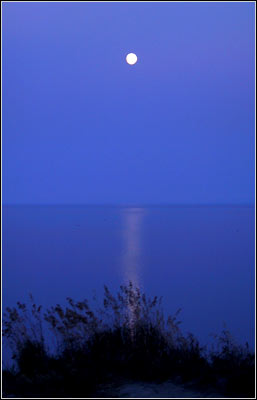
One light, one journey–
an unsullied oracle
from which to woo lore.
–Kathryn Harper
Old age is something we are all anxious to attain. However, once attained we consider it a defeat, a form of capital punishment. In enabling us to reach old age, medical science may think is has given us a blessing; however, we continue to act as if it were a disease.
More money and time are spent on the art of concealing the signs of old age than the art of dealing with heart disease or cancer. You find more patients in beauty parlors than hospitals. We would rather be bald than gray. A white hair is an abomination. Being old is a defeat, something to be ashamed of.
While we do not officially define old age as a second childhood, some of the programs we devised are highly effective in helping the aged to become children. …Now preoccupation with games and hobbies, the overemphasis on recreation, while certainly conducive to eliminating boredom temporarily, hardly contribute to inner strength. The effect is, rather, a pickled existence.
Is this the goal of existence: to study, grow, toil, mature, and to reach the age of retirement in order to live like a child?
Old age is not a defeat but a victory, not a punishment but a privilege.
–Joshua Abraham Heschel
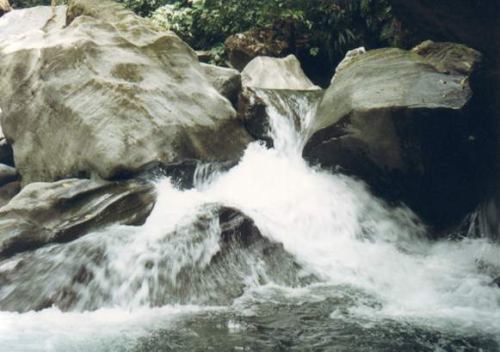
Water chisels rock–
nature’s Michaelangelo,
moving masterpiece.
–Kathryn Harper