My sister-in-law sent me a link that I have found very useful. It’s called Family Caregiving 101. Its tagline is: It’s not all up to you. The site offers many resources, including:
And these links are just from their FAQ page! They also have a link to support groups and literature. If you are helping a disabled, ill, or dying family member or friend, this site is well worth the time.
The excerpt below is sad news. My mother is recovering from breast cancer. I say “recovering” because, as far as I know, until five years have passed without recurrence, a woman is not “in the clear.” January 2005 will be the second anniversary of her surgery. I myself was confronted with cysts and biopsies that same month and year. It briefly brought me nose to nose with my mortality. I do wish Elizabeth Edwards all the best as she pours her energies into fighting this.
Elizabeth Edwards, the wife of John Edwards, the former Democratic vice-presidential candidate, received a diagnosis of breast cancer on the day his running mate, Senator John Kerry, conceded the election, a spokesman announced Thursday.
I came to Egypt and all the restrictions and carefully plotted exercise routines flew out the window. It’s impossible to avoid this food and stock up on that and do 15 minutes of cross training before your stint on the treadmill in Egypt. There are no nutrition labels. The only thing carb-free is the malnourished kid on your doorstep.
Willow’s post is a sweet meditation on body love and food, and her experience of Ramadan in helping her become more conscious of the relationship between the two. Another passage of hers that hit a chord:
It’s not part of the Shaheda—the oath one takes when one becomes a Muslim—but implicit in the boundaries of the religion is the following: you shall not, under any circumstances, knowingly fuck up your body ever again. Not through drinking or drugs or sex with someone who doesn’t love you. Bizarrely, this is perhaps the hardest aspect of the religion to follow…we don’t realize how used we are to letting our heads run the rest of us, or how hard it is to break free of that particular kind of bondage. The soul, I’ve discovered, is much more closely connected to the body than to the mind, despite what we commonly think. In tandem, they help each other, and the gentle pressure from each to each makes it possible, ever so slowly, to pry oneself free from one’s maladies.
I belong to an Internet community called Orkut. When I learned we were moving to this area, I joined some communities, such as the South Bay Area community, and sent a message, a call for information. I was open to whatever advice people wanted to give a newbie. Well, a very nice man named George was among those responding, and I liked his warmth. I read his profile and thought, “This is a neat person!” So I extended an invitation to become friends, which he accepted. Granted, he hardly knows me, but in these communities the concept of friend is defined loosely.
Anyhow, during the two visits I’ve had with Tish, she has spoken highly — nay, raved — about her friend George. He is so cool that he danced with her to Leonard Cohen. (I don’t know about you, but most men in my life have demurred at any suggestion of dancing, so any man who will boogie is wonderful indeed.)
Her enthusiasm about George sparked my curiosity, so I went to his blog. And wouldn’t you know, it’s the very same George! (Insert a quote from the Bugs Bunny cartoon where Hugo the Abominable Snowman finds Bugs and says “I will love him and hug him and pet him and squeeze him and I will call him George.)
A brief perusal of George’s blog provided some advice on how Movies are cheaper than therapy or pills. Below is an excerpt of his take on a movie that’s been hot in my little circle.
A. and I did get to see “What the Bleep Do We Know,” which annoyed the shit out of me. (Repetition of the phrase “quantum physics” by a slew of experts and special effects to describe peptides’ and hormones’ effects on humans doesn’t help. Biting the pacing of “The Matrix,” railing against addiction/overprescription of anti-anxiety/SSRI drugs and using a leaden overlay of story doesn’t help. Use of a Magic Negro with a basketball to explain superpositioning and a third-eye-touching shaman to explain how Native Americans learned how to see Columbus’ ships really, really, really doesn’t help.
Thank you, George. You’ve saved me some time. I owe you!
Siona started it, and I’m glad she did. What I’m about to post is lots of food for thought, and since I’ve not digested it all, I only present the material.
Siona has been thinking and writing about metaphors and how integrated they are in language, how they shape our worldview and actions.
In their later work, the authors [George Lakoff, Mark Johnson] make the case that it’s our essential embodiedness that make abstract concepts rely so heavily on metaphor. We can only use our experience, the fact that we’re bipedal, forward-moving, sighted creatures, to communicate; indeed, our experience is obviously primary to (rational) thought, and so it stands to reason that the latter would be so strongly influenced by the former.
I was thinking today about my earlier ramblings on metaphor. What if I’d fallen for Lakoff and Johnson’s theory too readily? If someone says “I’m in a bad state,” or “He’s defending his position” or “That new theory reshaped my views,” why wouldn’t we take their statement literally? The debater might well be defending a very real, and very important, territory: rather than being a certain spot, though, the region he’s defending is his world, his entire picture of reality. The person who is in a bad state is, literally, in a bad state: her environment is disintegrating, the air she’s breathing is polluted, her city is awash in poverty and her government corrupt. Someone whose belief system was altered may “see things differently” in a very real, and very physical sense.
Laura asked, after reading my last entry, whether the difference between literal and metaphorical language was that important. My initial reaction was that it is: it’s important to be aware of how the language we use shapes our thoughts. It’s important to be aware of the the metaphors that affect our literal world. What I didn’t realize was how recognized an issue this was, and what a hot topic it’s been recently.
It is for this reason that George Lakoff (who’s more local than I’d thought) has become such a politically engaged character. I ran across an article that ran in the Berkeley news about a year ago; in it, Lakoff talks about the difference between conservative and progressive language use, and the role that he has taken on personally in bolstering the efforts of the latter.
It’s a fascinating interview. Lakoff’s discussion of framing was especially frightening.
The same paper contains some more recent articles as well; in them, Lakoff talks about the power of phrases such as “the war on terror” (he points out that terror is a state of mind, which is internal to a person; thus “‘the war on terror’ is not about stopping from being afraid, it’s about making you afraid”) and “tax relief” (which implies that taxes are an affliction rather than a responsibility or a right). Most of these can be found at the Rockridge Institute site. It”s an impressive resource, and an impressive analysis of the power of speech and phrasing in this year’s election, and in politics in general.
If you visit the links provided, you will find links in her posts to the sources she mentions reading. Siona’s thoughts have generated much commentary. One of them, titled In Defense of Terror also sparked comments. [Edit 9/29: it was not written in response to, but concurrently. Ah, synchronicity.] I posted it here in the extended entry because the statements prickle, make me uncomfortable, encourage (demand?) me to question my assumptions, and that’s important. We need to remain aware. Obviously I’m restating other peoples’ thoughts without generating my own; with regard to this blog, I try to aim for being a conduit of information (admittedly not an unbiased one, because being human precludes objectivity most of the time). So if these words incite a reponse, feel free to leave a comment, but I won’t attempt to interpret further the authors’ intent. I put this here to catalyze your brain and mine. Continue reading →
Some books said that it might take a few weeks (HA!) or months before the procedure could be reconvened, and if you’re one of those women who after only six weeks of shoving her boobs down a bottomless opossum could reconvene the procedure with a smile or maybe even an “ooh, yes” then I heartily salute your robotic, adjustable vagina. I bet yours is the type of vagina that can hum show tunes or fold sheets all by itself.
I derive great pleasure — very great pleasure — from reading her blog. She has such an irreverent style, and does not hesitate to use herself and life as source material. Why, she can even make fun of herself! At the same time, she writes honestly and seriously about topics such as post-partum depression, mothering challenges, and trouble with RECONVENING THE PROCEDURE. Read more!
I admit it. The work of art below is based on code I’ve taken from Mandarin Design. The good thing is, Meg encourages people; the purpose of her blogx is to help the technically challenged learn tips and tricks to make interesting visuals. I ran out of steam before I got to the end of creating this quilt (it had 70 squares). If you find yourself left off, please don’t take it personally. In some cases I needed to scour for images and resize them, and since I’ve been at it for eight hours and haven’t eaten, I thought it wise to call it a day. Update: I continued working on this after dinner. The quilt is now complete with 60 squares.
Tish and I had a discussion last week about physical appearance and cultural attitudes. I then briefly posted about it and quoted from an article I’d read in the NY Times. Tish was able to access the article by Harriet McBryde Johnson elsewhere.
Tish then contemplated the article and a movie she watched. Here’s an excerpt:
It is easier to care for the beautiful, strong, able, bright and shiny. It does require a kind of effort to know how to look and really see people. True caring asks us for some effort. I think, for the people who make the effort, it doesn’t feel like effort. It feels obvious. Maybe for some people it is effortless. Maybe there is some innate character involved. But as long as we are living in a system that floods us with images and ideas about what beauty is I think we need to make some effort to check ourselves.
I am on an email list for a daily meditation text, and this morning the following arrived from the list manager.
Please pardon this personal message but there is some urgency in reaching out to as many people as possible. I have a friend who is on a list for a liver transplant, but the list is so long that she most likely will not survive. Her husband has asked that someone be located who is in a position to donate part of their liver. The ideal donor must have type O blood, be over 18 (and under 50), and be the same size or larger than the recipient (who is a slim woman). The success rate is for the procedure is 99%. You can learn more at Transplant Week. If you can offer assistance in any way, please contact me directly. Thank you.
Farishtah
The address is farishtah at earthlink dot net. If you would, please share this with anyone you think might be interested. One never knows; the act of circulating information is powerful and can generate surprising results.
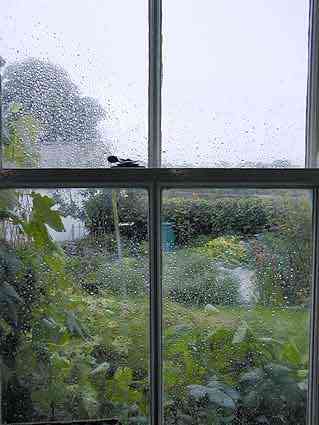
I’m inordinately affected by the weather. It took me a long time to admit this; for years I refused to acknowledge that my moods might be linked to something as improbable and distant as the sky. I was a rational person, I thought; my emotions were linked to that which mattered, and not some butterfly flapping its wings in the Amazon. Now I’m less embarrassed by my sensitivity. I’m an animal. I reside in a body that resides in the world that itself reclines under a pulsing membrane of pressure and weather and rain. How can my own cells ignore the atmosphere around me? How can my bones disregard the heaviness of the air? How can I not fail to respond to the sun on a clear day? It’s more embarrassing to me now to think that I once believed I should be capable of ignoring all this. I’m attuned to the world. We all are. And I no longer mind.
I had a wonderful encounter with Tish yesterday. Five hours of glorious conversation! It did my mind and heart good. I can write more about this, but the hour is late. I’m sure tidbits of what we processed will inspire a number of future posts.
We discussed, among many topics, the issue of cultural responses to fat and to bodies that are different from the “norm.” I remembered an article I read in the New York Times last year that I’d blogged about in my retired original blog (The Hestia Chronicles). I dug it out of the archives and am re-posting the excerpt. The Times requires registration; since this is an old article, you’ll have to pay if you want to read the entire piece. It’s worth the cost. It’s the most provocative essay I have read on the topic. Ever.
He insists he doesn’t want to kill me. He simply thinks it would have been better, all things considered, to have given my parents the option of killing the baby I once was, and to let other parents kill similar babies as they come along and thereby avoid the suffering that comes with lives like mine and satisfy the reasonable preferences of parents for a different kind of child. It has nothing to do with me. I should not feel threatened.
Whenever I try to wrap my head around his tight string of syllogisms, my brain gets so fried it’s . . . almost fun. Mercy! It’s like ”Alice in Wonderland.”
It is a chilly Monday in late March, just less than a year ago. I am at Princeton University. My host is Prof. Peter Singer, often called — and not just by his book publicist — the most influential philosopher of our time. He is the man who wants me dead. No, that’s not at all fair. He wants to legalize the killing of certain babies who might come to be like me if allowed to live. He also says he believes that it should be lawful under some circumstances to kill, at any age, individuals with cognitive impairments so severe that he doesn’t consider them ”persons.” What does it take to be a person? Awareness of your own existence in time. The capacity to harbor preferences as to the future, including the preference for continuing to live.
At this stage of my life, he says, I am a person. However, as an infant, I wasn’t. I, like all humans, was born without self-awareness. And eventually, assuming my brain finally gets so fried that I fall into that wonderland where self and other and present and past and future blur into one boundless, formless all or nothing, then I’ll lose my personhood and therefore my right to life. Then, he says, my family and doctors might put me out of my misery, or out of my bliss or oblivion, and no one count it murder.
–from Unspeakable Conversations by Harriet McBryde Johnson; New York Times Magazine, 2/16/03.
When I make personal disclosures on this blog, I strive for more autobiographical vignettes attached to a broader thought or message, rather than writing as though in a diary. I have another blog for that kind of writing.
That said, I’ve made no secret of the fact that I manage to live with (around, despite) ongoing clinical depression. Years and years of talk therapy helped create insight as to part of its origins; it mostly taught me to be aware of symptoms and to be gentle in my self-assessment (one aspect of depression is a tendency toward rippingly negative thinking about oneself). Talk therapy is also what made me the counselor I am, possibly more so than the graduate courses.
On the other hand, I also take medication, and have for six years; it has helped immensely, and so I believe the depression has its roots in the physical as well as cultural/social. In other words, it’s not all my parents’ fault — it’s their genes’ fault! (Smile, please, that was an attempt at humor.) Medication therapy has its place.
I expected this transition to challenge my equanimity. What I wasn’t certain about was the degree to which I’d experience the undertow. Since my credentials are invisible according to the California Board of Behavioral Sciences, and I’d have to undergo training all over again — which I am simply not going to go through after five years of education and clinical training, an exam, and $60,000 — I’m at a loss. I had a private practice in Austin, but here I do not have the connections yet to establish one — and it would have to be as a “life coach” or other euphemism, without the cachet and seal of approval that official recognition (licensure) provides. Jobs I’ve seen require licensure, even for positions such as utilization management. I’ve kvetched about this here before.
The well part of me knows that it’s hard to reestablish onself, that it takes time, but it can be done. I simply need to put myself out into the world, tell people my vision, explore, connect, and trust that the right situation will arise.
However.
That’s the well part of me, the aspect of myself that shines when my life is mostly trundling along its course in other ways. Yet here I am trying to recreate a social network, a sense of place and home, a spiritual community. The loss of these things, along with the loss of professional qualifications (or at least my sense of them), along with the latent depression, are converging. I’m struggling to establish a routine, a vision, goals. I’m struggling with depression — or some of the symptoms. Significantly.
I know I will be all right. I know what is needed to take care of this. I just wanted to write about it (part of the process of taking care), to let my blog community know that I am grappling with this nemesis again. I am so grateful; my life is a gift. I feel vexed with myself that this crud covers my spirit, that I can cognitively understand I am blessed but still feel lost, listless, hopeless, sad. But there it is. I need some good vibes, folks, some prayers or encouragement or a job in my field (which includes counseling, coaching, teaching, academic advising, writing, librarianship, non-profit program management, and information management).
I am going to take tomorrow off. I shall go into San Francisco to have coffee and lunch with Tish. I’m heartened by this, as I think we have much in common. And just for fun, I’m posting in the extended entry the “flower picture of my ideal job” (from exercises I’ve done in What Color Is Your Parachute). In case you happen to have a job to offer (or know of one) that fits, or mostly fits, the description. Ideas, names of people to contact for information interviews, guidance on finding cameraderie in the job search are also welcome. Continue reading →
Look at the shit that’s passed off as food these days. Look at the sugar-soaked, over-fatted (or defatted), over-preserved, artificial, neonized, irradiated, modified, processed, pesticide-smeared crap that’s fed to children. Look at the non-food that wrapped and packaged and stamped with a decade-long ‘sell-by’ date. Look at the tallow-injected, deep-fried, fortified, refined and shrink-wrapped products in our supermarkets. Who would eat this?
God must have loved calories… he made so many of them.
–from a magnet on my refrigerator
I love to eat — I really enjoy the experience. As I get older, my body is slowing down, and the weight has crept up. It’s not just age; inactivity is a significant factor too. In my youth I flirted with bulimia, bingeing, overexercising, using laxatives, starving myself. This, fortunately, was a short-lived experience that did not hurtle me into a dangerous disorder.
I look at photos of myself 10 and 20 years ago and think, “If only I could have seen then that I really was a normal weight…” Recently, I was referred by Siona to explore a site called Normal Eating. I highly recommend it as a sane approach to understanding food, emotions, and one’s body. One can hope to enjoy many of those calories God made and stop obsessing over each one.
I wrote an essay in 1998 for one of my graduate classes that dealt with legal and ethical issues in my profession. At the time I was battling an episode of major depression which was made more acute that year by: a significant loss, and an unwisely created emotional attachment to someone completely unavailable as I grieved that loss.
I’m pondering issues of life and death again, in part because my fiancé’s father is gravely ill, and also because transitions of any kind — even good ones, such as my move — bring reminders of the ultimate passage we humans face. I’m applying to volunteer at The Centre for Living With Dying. Answering the application questions reminded me that I’d written a paper on the topic. Since a blog is the writer’s forum for inflicting expounding one’s views, I’m laying it out here. It’s very long (don’t say I didn’t warn you). I’m also closing comments due to the personal nature of this essay. Comments can be emailed to me directly. Without further ado… Continue reading →
The way of transformation lies in surrendering our illusions of control and learning to live with uncertainty. It means taking pleasure in our fundamental questions about life rather than rushing toward simplistic answers. It means we strive not just to understand but to embody our understanding. The way of transformation requires a special kind of toughness and willingness to experience emotional intensity. It requires humility and a foolishness born of the desire to live and love with abandon.
And the payoff? The payoff is the ecstasy that comes through seeing, with openheartedness, things as they are, and allowing feeling, sensation and love to flow through us. Ecstasy is a word we can hardly use without conjuring thoughts of drug use, madness, or inability to function. But when I speak of ecstasy, I am not talking about some dangerous state where we are out of control of our actions or out of touch with reality. (The only threat that ecstasy poses is that it breaks down our illusions of separateness and it reveals the madness of heartless competition and greed). Instead, it is an intense joy available to most everyone. The mystics say it is our essential nature, our natural state. Once we open ourselves to the ecstatic flow of feeling and energy in our bodies, we are less bound to old ideas about the kinds of protections that are needed to live in this world. Our own ability to open and connect becomes a source of power in times of conflict or adversity.
You can also read an essay he wrote reflecting on his experience with yoga and healing here. I miss working with him and his co-facilitators. I miss the group. But hey, I’m in California. This place, if nothing else, is rich with venues for growth. I’ve only just arrived. Patience. In time, I’ll see more. (Patience is one of my developing traits!)
A study published in Health Psychology found that sedentary women who exercised in front of a mirror for 20 minutes felt less energized, less relaxed and less positive and upbeat than women who performed their workout without a mirror.
Women who exercised without the mirror also reported that they were less physically exhausted at the end of their workout, while those with a mirror reported no change in their exhaustion level.
The findings could have implications for encouraging physical activity among sedentary women, especially since the standard guidelines for exercise promotion suggest that workout rooms have mirrors on at least two of four walls.
As such, the recommended practice of placing mirrors in exercise centers may need to be reconsidered, especially in centers that are trying to attract exercise initiates, say Kathleen A. Martin Ginis, Ph.D., of McMaster University and colleagues.
Apparently the research also found that women with good body image felt negative effects in the same environment. That’s why I go to Curves.
Tish writes a thoughtful rebuttal to a post that begins with Watch it, Fatso. Among many points she makes are:
Here’s what I wonder. I wonder why you’re mad at me and not the airlines. Seats are smaller than they used to be. Asses may be bigger but seats are also smaller. The space between seats is smaller. I realize that airlines are struggling. I also realize that when the airlines get bailed out my tax dollars are in that pot. The right to access on means of transportation is written into law. Whether or not we’re comfortable isn’t mentioned. But don’t you imagine that they can find a way for us all to be comfortable?
and
I often wonder how many kids are going to have extreme eating disorders in the next few years. With the constant hammering away from the media about how terrible it is to be fat I’m imagining a rise in eating disorders. And make no mistake. People die from eating disorders. Even when they don’t die they suffer damaged emotional and physical health. How about if instead of talking in terms of limiting we talk in terms of a fully engaged relationship with food. If no kid ever walked into a fast food restaurant again there would be no one happier than I. Kids who hang out with me know that this is the time of year to eat lots of heirloom tomatoes. Unless you don’t like tomatoes. In which case, let’s talk about peaches. Kids who hang out with me listen to rants about the difference between real food and crap food. Make kids exercise? How about if we stop jamming them with Ritalin and telling them to sit still. How about if we fund after school programs and school sports.
“Feminists and liberals have transformed a legitimate medical issue of the poor into identity politics for the affluent,” Greg told me, “which I find the worst kind of narcissistic behavior.” But he also lacks patience with right-wing complaints about government intervention: “Those libertarians who have all kinds of problems with government programs about obesity are going to be crying their eyes out 20 years from now,” he added, when a fat and aging population brings with it increased taxes and social burdens.
But then, I think the binge and purge ethic that dominates our culture, part of the generally pornographic sale of the body, is in fact the worst kind of narcissm.
Up until tonight I’ve been falling into bed immediately into a deep pool of sleep. I’m not sure what happened to thwart this, but it’s 3:18 a.m. as I type and I’m obviously awake. (Some might argue that the quality of writing is an indication otherwise, but they’re — well, just plain wrong.)
Rather than lie abed fidgeting, I’ve been accomplishing tasks that are not on my list but need doing nonetheless (small stuff that doesn’t occur to me when I write the list). For instance, even though people will come with boxes and paper to pack next week, there are some family heirlooms (e.g., small porcelain items) that I don’t want to leave to their whims. I’m sure they’ll wrap them in paper nicely, but I want bubblewrap around them too. So I did this; I just can’t box them (or their insurance won’t cover the property).
There is also the task of making sure to put the cats’ health information in the bag with the accessories they’ll need for the trip (treats, sedatives, litter pan liners, etc.) Oh, and then I had an idea for how to rearrange some office files so the my fiancé will have room for hanging folders. I often get creative ideas to small problems when I lie in bed. And as I write this, I just remembered I need to put my jump rope where it will be included with the “Keep” pile and not the Goodwill one.
My eyes are growing heavy while I type, so perhaps this small ritual of doing and telling will release me. I need the sleep. We have lots to do today: the car to the mechanic, the bank, the laundry, the…