
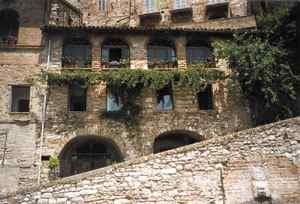
These stones harbor tales
of peasant and saintly toil
in service of kings.
Category Archives: Social Science
The Truth Of Competition
I found a fascinating article on the history of the Olympics that describes how divergent the modern games are from the ancient ones in terms of philosophy. With the modern games, “the relentless emphasis on human-interest drama, the uncomfortable efforts to maintain the thin pretense that politics are absent, the ceaseless rhetoric of pure athleticism, even after the all-amateur rules were abandoned” are an attempt to overlay Judeo-Christian values onto the do-or-die nature of competition. Mendelsohn writes:
Part of the reason the ancient Games were so uncompromising and often violent has to do with what was at stake. The Greeks, for the most part, had no heaven; with some notable exceptions, good and bad all went to the same gray, characterless, drizzly underworld after death, and that was that. In the absence of a post-mortem reward for moral goodness, the one thing you could strive for was immortal fame — doing something so glorious that men would talk of you in years, centuries, millenniums to come.
…Victory or death. This, in the end, is the grimly pure ethos of the contest, where there is (however much we like to pretend otherwise) only one winner; you wonder whether this is why the poet Pindar referred to Olympia as the ”mistress of truth.” Death was the origin of the ancient athletic contests, and the all-or-nothing logic of death hovered over the ancient Games, where there were no illusions about what victory meant, or could often cost. But the kinds of truth about which the pagan Greeks — who lived in intimate, unsentimental and regular contact with death, violence and warfare — had no illusions are precisely those that we like to play down or bury under sentimental and infantilizing trappings: adorable bears, cutesy eagles, rag-doll gods and goddesses. Every four years we all like to indulge in the sentimental fantasy that we’re communing with the pure and noble spirit of the classical Greek past. But purity comes at a price, and that price is the truth: what is victory, and what is defeat? There is, you suspect, no friendly side of a tiger; nor, really, of an athlete engaged in a test of physical prowess. That’s the truth of competition, at least as far as the Greeks saw it; but then, who wants Death as a mascot?
— Daniel Mendelsohn, This entry was posted in Social Science on .
Haiku
Life is a sculptor
having etched its history
on more than memory.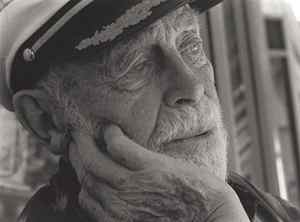 “Paris in Newark” by John Buckley ©2003 /ephotograph.com
Part Of My Roots
I grew up in central New York. Ten years ago when I was so ready to leave, I referred to it as “a great place to be from.” I couldn’t wait to shake the dust (or rather, slush) from my shoes. Over time, however, the distance helped me to see what is special about upstate New York, a place of emerald-green lushness and abundant seasons.
One thing I take pride in about central New York is its rich economic, cultural, and political history. For instance, Seneca Falls is the seat of the National Women’s Hall of Fame. Elizabeth Cady Stanton was a driving force for the suffragist movement:
“Oh my daughter, I wish you were a boy!” her father said, grieving at the death of his only son. Young Elizabeth vowed to prove him wrong. She worked hard to excel in Greek, Latin, and mathematics, and obtained the finest education then available to women at Troy Female Seminary. When she married Henry Stanton, an activist in the anti-slavery cause, the word “obey” was omitted from the ceremony at her insistence.
Stanton wrote and presented the Declaration of Sentiments on July 19-20, 1848 (one of the most eloquent and stirring declarations I’ve ever read). She also worked with Susan B. Anthony to win for women the right to vote. There are many other women highlighted at the web site.
‘Tis A Quandary
This is brilliant. Absolutely brilliant. I followed a link from Siona’s blog and am glad I did.
I can’t seem to figure out what to do with my head. It is too small to carry the right sort of luggage and dangerously prone to spills and injuries. I was thinking I might rent it out for microidea transmission, but I’m not sure how well I’d like sitting on top of a metal tower during thunderstorms. Then there’s the whole issue of bird droppings. Perhaps I could put it in a breadbox to keep it fresh. But lately it has this alarming tendency to weep, which could promote spoilage.
It is a jealous head with only a vestigial sense of humor at best. But it has eyes only for me. I rap on it with the knuckles of my right hand, never my left. I take it on road trips as well as for short walks around the farm. It never went to obedience school, but in its middle age I find it has developed very regular habits. Loyalty is the only coin it trades in.
My head has led a tragic existence – kind of like the Ugly Duckling in reverse, I sometimes say. Imagine growing up expecting to turn into a swan, only to discover that – alas – you’re really just another puddle duck.
I do keep it fairly well groomed now. Just the other day, it occurred to me that some of the people I used to be friends with back when I let my head grow dreadlocks probably wouldn’t want to hang out with me now. Some people I hang out with now definitely wouldn’t want to be seen with me if my head still wore dreads. Then I started thinking: all my friends are really my head’s friends. Could that be where this loneliness comes from?
I never went to a shrink, because I figured s/he would try to convince me it’s all in my head. I refuse to stoop to that kind of sophistry: it’s not just wrong, it’s idolatrous. For the Freudians, especially, one wonders if a head can ever be anything more than a misdirected phallus, the body’s grotesque bolete.
Right now my head is tired and a little overwhelmed. I am feeding it a rare, late-morning beer as I write. It has been short on sleep in recent days and rather short-tempered as a result. I’m thinking that a little alcohol might short a few, over-sensitive circuits. And though my forehead remains an open book for those with the proper training, a slight flush always helps to hide the marks of abuse from that beast, my body.
–Dave, author of Via Negativa
I See Invisible People
There was a woman on the train yesterday talking on her cell phone. Loudly. I thought about all the times in the day when people were annoying. The car that moved too slow out of the parking space or wouldn’t let us into the lane. The woman in the grocery store, blocking the lane. We get on each other’s nerves. We arrive in each other’s day at inopportune moments and want things from each other. Things that aren’t easy to want to give. When I’ve worked in service jobs like waitress I’ve felt such rage at people’s demand on me and my invisibility. Spend one year of your life being a wait-person or a sales clerk. It will change the way you see people.
–Tish, at Fatshadow
In my life I have worked as a paint store sales clerk, a clothing store clerk, a taco maker, a burger flipper, a cashier in a drugstore, a desk clerk in a hotel. (Yes, I’ve lived awhile.) Most were moonlighting jobs I took to make ends meet in my twenties. Several of these jobs were in a university area, which provided its own kind of invisibility. I did not wish to be on the service-side of the counter. I wanted to be a typical college student. Like Tish, I struggled with my feelings of rage against life circumstances, and against the condescending demeanor of customers who thought that I, by virtue of wearing a uniform or ringing up their items, could be spoken to rudely, mocked, and on occasion (depending on their degree of inebriation), threatened.
Throughout these years I worked full-time at the university, part-time for extra income, and took college classes until I graduated with a B.A. in psychology just six months shy of turning 30. I attended college as a “typical” student — living in a dorm — for one year when I was 26. After having lived on my own for a bunch of years, sharing a 10 by 12 foot room felt like prison. I struggled to adapt. By that time, I’d outgrown the desire to have that experience. And while I didn’t love the extra jobs I had, they taught me to appreciate people who work in these hard, low-paying, often thankless and futureless jobs. It’s something I try to keep mindful of, even though those years are long gone.
Collective Intelligence
We need collective intelligence, a coherent integration of our diversity that is greater than any or all of us could generate separately, just as an orchestra is greater than the sum of its instruments. We need a new kind of collectivity that does not repress individuality, diversity and creativity but that, instead, allows us to arrive at creative consensus without compromise. We need a shared power that calls forth the best in all of us and cherishes our diversity for the riches it contains.
–Tom Atlee, The Tao of Democracy
[via Democracy for California]
Food Glorious (?) Food
Tish writes a thoughtful rebuttal to a post that begins with Watch it, Fatso. Among many points she makes are:
Here’s what I wonder. I wonder why you’re mad at me and not the airlines. Seats are smaller than they used to be. Asses may be bigger but seats are also smaller. The space between seats is smaller. I realize that airlines are struggling. I also realize that when the airlines get bailed out my tax dollars are in that pot. The right to access on means of transportation is written into law. Whether or not we’re comfortable isn’t mentioned. But don’t you imagine that they can find a way for us all to be comfortable?
and
I often wonder how many kids are going to have extreme eating disorders in the next few years. With the constant hammering away from the media about how terrible it is to be fat I’m imagining a rise in eating disorders. And make no mistake. People die from eating disorders. Even when they don’t die they suffer damaged emotional and physical health. How about if instead of talking in terms of limiting we talk in terms of a fully engaged relationship with food. If no kid ever walked into a fast food restaurant again there would be no one happier than I. Kids who hang out with me know that this is the time of year to eat lots of heirloom tomatoes. Unless you don’t like tomatoes. In which case, let’s talk about peaches. Kids who hang out with me listen to rants about the difference between real food and crap food. Make kids exercise? How about if we stop jamming them with Ritalin and telling them to sit still. How about if we fund after school programs and school sports.
There are also many interesting comments at this link in response to a comment reputed to be made by Greg Critser, the author of Fatland: How Americans Became the Fattest People in the World:
“Feminists and liberals have transformed a legitimate medical issue of the poor into identity politics for the affluent,” Greg told me, “which I find the worst kind of narcissistic behavior.” But he also lacks patience with right-wing complaints about government intervention: “Those libertarians who have all kinds of problems with government programs about obesity are going to be crying their eyes out 20 years from now,” he added, when a fat and aging population brings with it increased taxes and social burdens.
Although April makes makes some excellent points including:
But then, I think the binge and purge ethic that dominates our culture, part of the generally pornographic sale of the body, is in fact the worst kind of narcissm.
Do take some time to read these posts.
Rowing Through Eternity
The Dead The dead are always looking down on us, they say,
while we are putting on our shoes or making a sandwich,
they are looking down through the glass-bottom boats of heaven
as they row themselves slowly through eternity.They watch the tops of our heads moving below on earth,
and when we lie down in a field or on a couch,
drugged perhaps by the hum of a warm afternoon,
they think we are looking back at them,which makes them lift their oars and fall silent
and wait, like parents, for us to close our eyes.–Billy Collins, 1991, from
Questions About AngelsThe Institutionalization Of Lying
All the world’s a stage,
And all the men and women merely players:
They have their exits and their entrances…–Shakespeare, As You Like It
Cingular Wireless now offers a new wrinkle on this strange social effect called “Escape-A-Date.” If you’re going out on a date, you can arrange to have your cellphone ring at a specified time. The call guides you through a script that makes it sound, to the gullible party across the table, as if you’ve got to rush off. Think of it as a wake-up call with benefits. If the date’s going well, just don’t answer.
–New York Times — This entry was posted in Social Science on .
Where Oh Where Has My Restful Sleep Gone?
Up until tonight I’ve been falling into bed immediately into a deep pool of sleep. I’m not sure what happened to thwart this, but it’s 3:18 a.m. as I type and I’m obviously awake. (Some might argue that the quality of writing is an indication otherwise, but they’re — well, just plain wrong.)
Rather than lie abed fidgeting, I’ve been accomplishing tasks that are not on my list but need doing nonetheless (small stuff that doesn’t occur to me when I write the list). For instance, even though people will come with boxes and paper to pack next week, there are some family heirlooms (e.g., small porcelain items) that I don’t want to leave to their whims. I’m sure they’ll wrap them in paper nicely, but I want bubblewrap around them too. So I did this; I just can’t box them (or their insurance won’t cover the property).
There is also the task of making sure to put the cats’ health information in the bag with the accessories they’ll need for the trip (treats, sedatives, litter pan liners, etc.) Oh, and then I had an idea for how to rearrange some office files so the my fiancé will have room for hanging folders. I often get creative ideas to small problems when I lie in bed. And as I write this, I just remembered I need to put my jump rope where it will be included with the “Keep” pile and not the Goodwill one.
My eyes are growing heavy while I type, so perhaps this small ritual of doing and telling will release me. I need the sleep. We have lots to do today: the car to the mechanic, the bank, the laundry, the…
Limited Liberty

It’s perhaps an unavoidable result of the vigilance against terrorism, but a sad one nonetheless. The new tour stops short of the hem of Liberty’s robes, at the top of her thick concrete pedestal, in a room that holds only 30 people at a time, or about 3,000 people a day who are quickly shuffled in and out. While a guide gives a short talk and shows a video, tourists are invited to look up at the ceiling, where a few glass panels give a glimpse of a few feet of the interior. Tourists can also step into the open air on a deck that lines the pedestal. That’s as good as it gets. And that’s only after each visitor is screened twice, by X-ray and metal detectors before boarding a ferry to the monument, and then on the premises by new scanners looking for explosives and narcotics. Throughout the statue’s base are monitors showing the routes to the nearest exits in case of an emergency, while across the bottom scrolls a constant message: “If you see something, say something.” Oddly enough, this antiterrorism mantra, which appears in bilingual postings in city subways and buses, is only in English at this symbol of America’s polyglot immigration.
–Carolyn Curiel
[via This entry was posted in Social Science on .
If You Wish
If you wish people to obey you, you must learn to obey yourself; if you wish people to believe you, you must learn to believe yourself; if you wish people to respect you, you must learn to respect yourself; if you wish people to trust you, you must learn to trust yourself.
–Hazrat Pir-o-Murshid Inayat Khan
From: A Meditation Theme for Each Day
Selected and arranged by Hazrat Pir Vilayat Inayat KhanHaiku
It is not evil.
Money symbolizes the
exchange of life force. “A Fact of Life” by Kathryn Petro / ©2003
Tears of Relief and Grief
One month ago I put out the word that one of my cats needed a new home. Her fragile mental state made us concerned that she wouldn’t weather the transition, and we learned we were only allowed to have two cats in our new abode.
I received numerous comments and emails (some rather mean and judgemental) and lots of advice (some helpful, some not). People in my community spread the word. At last, Zoë has a new home. A friend whom I supervised for practicum volunteered this morning. We spoke at length about the transition (she has three cats right now) and she’s committed to helping Zoë integrate into a new home.
I’ll bring her over tomorrow evening. As soon as I hung up I told my fiancé and then promptly burst into tears. I’m relieved and deeply grateful that CN will take her. I know she will give Zoë a good home. I’m sad about saying good-bye. I’m leaving behind so many loved ones.
Of course, the tears are also prompted by other stressors too. Our realtor visited us yesterday and we learned that the market isn’t so good for selling. We bought in 2000 at the peak, and since then our house assessment has decreased. We’ll be lucky to sell it for the balance of the loan; we certainly won’t reap any profit or recoup the down payment.
Then this morning the moving company sent someone to assess our belongings. We’re divesting a lot of furniture, and I’ve given up a number of books already, but it seems we may be over the 8000 pound limit that the employer will pay for. We’re waiting to hear how much more we’ll have to pay out of pocket for the extra weight (we’re about 3000 pounds over). This move is costly, with lots of contingent expenses, even though it’s being paid for. (We’ll have people come pack us, a luxury I’ve never enjoyed before.) If the company had not offered a full relocation package, we wouldn’t be moving, that’s certain.
In any case, I thank the CN for her generosity and compassion. And I’m going to focus only on the next task at hand, lest my head explode.