Category Archives: Humanities

Book Meme

This has made the rounds, so I’ll join in.

1. Grab the nearest book.
2. Open the book to page 23.
3. Find the fifth sentence.
4. Post the text of the sentence in your journal along with these instructions.

Her pointed, lifted bow resembles a shark’s jaw and rides well in turbulent seas, keeping me relatively dry rather than drenching me with spray.

–Jill Fredston, Rowing to Latitude: Journeys Along the Arctic’s Edge

Who or What is God?

Zuly has a new blog project:

My sister and I are working on a project for one of her classes, and we’re looking for images and ideas from people of all ideologies and faith backgrounds, and we’d like to know what you think about God. Leave your comments in this post, send us pictures (more than one, if you want), or write a post about it in your own blog or journal (if you don’t useTrackBack, send me the link!)

Pictures and reflections will be used for a blog that we’re working on called In Your Eyes. The goal is for it to be an interactive place for reflection about this idea of God. … Atheists and agnostics are welcome to provide their reflections as well.

What Freud Didn’t Understand

Far from being a mystical retreat from the complexities of mental and emotional experience, the Buddhist approach requires that all of the psyche be subject to meditative awareness. It is here that the overlap with what has come to be called psychotherapy is obvious. Meditation is not world denying; the slowing down that it requires is in service of closer examination of the day-to-day mind. This examination is, by definition, psychological. Its object is to question the true nature of the self and to end the production of self-created mental suffering. It is a pursuit that various schools of psychotherapy have been approaching independently, often without benefit of the overarching methodology of the Buddhist psychologists of mind. As long as Buddhism could be seen as a mystical, or otherworldly, pursuit, as an Eastern exoticism incomprehensible to the Western mind, as a spiritual pursuit with little relevance to our complicated neurotic attachments, it could be kept isolated from the psychological mainstream, and its insights could be relegated to the esoteric shelves of “Eastern philosophy.” Yet, Buddhism has something essential to teach contemporary psychotherapists: it long ago perfected a technique of confronting and uprooting human narcissism, a goal that Western psychotherapy has only recently begun even to contemplate.

–Mark Epstein, Thoughts Without a Thinker: Psychotherapy from a Buddhist Perspective

Another Blogger Born

Ten years ago, I never would have envisioned being connected by computer to the lives of millions of people. As a librarian accustomed to ferreting out information manually and laboriously, I would have been agog at the concept of Google. To have the world of information at one’s fingertips and at an unbelieveable speed! Granted, there is about as much dross on the web as there is gold, but it’s possible to concatenate information from a much broader base. Information is a power, and the more we can access and sift through in efficient ways, the greater our personal power.

The community of blogging manifests in more than online connection. I have a tribe, so to speak, of bloggers in Austin who are available as friends and resources. It’s a new form of neighboring. I have also discovered blogging minefields; it is a revolutionary form of communicating and publishing, and I’ve learned the hard way on a few occasions just how this affects people in my personal life. Yet it’s been exciting nonetheless, and I’ve learned from my errors. Such are the risks inherent in new ventures.

Google offers several new services, still in beta mode, that intrigue me. One is the web alert, where one can ask that Google send email whenever a particular phrase is mentioned on the web. Since I’m curious about where my name may be linked, I set it up to search “Kathryn Petro.” I’m not the only person name thusly, so I’ve received notification about other Kathryn Petros. Yet tonight I learned that I had been selected — along with Real Live Preacher and Hoarded Ordinaries — for review by a new blogger, Betty Tew, as she joins the community of blogophiles. She’s taking a class and the assignment has been to assess three weblogs for their accessibility, style, and content.

Like me when I began blogging, she is still in the process of developing her voice and style, as well as deciding what themes she may focus on. Many of us find that blogging provides a venue for personal expression and exploration that is more satisfying than writing in a private journal. Betty mentioned that it’s akin to writing a letter to the world, something I’ve often said. She later wrote about missing her father on his birthday. He passed away last year, and she is learning to live without him; various holidays come and go, and one observes them, feeling the gap left by the beloved’s absence. This post was especially poignant for me, given that my partner’s father is battling a rare form of lymphoma at a relatively young age (61); this cancer does not respond well to treatment, and it has impressed upon us the urgency and heightened awareness that comes with confronting a deadline (no pun intended). It’s a destiny we all face, and the fact that we manage to get up daily, pocket that awareness, and pursue life amazes me. Yet awareness of death — to a certain degree — enhances living.

In any case, I am grateful for the technological developments that have afforded me this new community. I welcome Betty to the world of blogging and hope that she finds great satisfaction in it.

Waters of Life

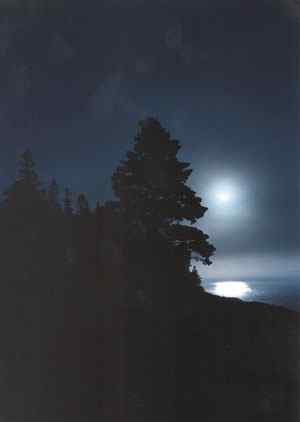
What do people want? What are any of us actually, fundamentally, looking for in all the various things we are looking for? We all are, and yet we remain unconvinced that we are, or that we are enough. Regardless of how much we augment our being with our immense doing, in an effort to construct an abiding and secure identity, we remain unsure. Even the greatest of us know, in the middle of the night, when the moment is most tender, that we are all like clouds, like grass, springing up and dying back when winter comes. Somehow, despite all the various accomplishments, both inner and outer, of a lifetime, none of us can escape the fact that we are less and less day by day, as time runs on. Whether or not we think about this we all know it. The most basic fact of our lives — our very existence, our very sense of identity — is elusive, constantly sliding away.

It was the genius of the Buddha to pinpoint this abiding human problem and to apply gentle acupressure right at the heart of it. The Buddha felt that since what we hold to as identity, our fixed sense of being a person, is so unreliable (as we always knew, always feared), we should stop insisting on it with such shrillness. Rather than trying to avoid the reality of not being someone, Buddha thought that we should observe and embrace this fact. There is no real identity outside of flux, he taught. If we practice and train in this existential fact, which we verify with meditation experience, then we have nothing to fear. As we begin to warm up to life in this way, with openness to the endless change within and outside us, we come to see the effort to maintain a brittle sense of identity as cold, even frozen. We come to appreciate that the whole point of spiritual practice is to warm up, to become flexible with what we think we are and begin to release ourselves to our experience as it really is. This warmth melts the ice of identity and lets the waters of our lifetime flow.

— Zoketsu Norman Fischer

[via whiskey river]

Walk On The Wildflower Side

Seton Cove offers a day retreat comprising a drive through Hill Country back roads to enjoy Texas wildflowers and walk three different outdoor labyrinths. From the announcement:

While today people don’t use labyrinths to complete a specific symbolic pilgrimage per se, the experience of walking the labyrinth helps to clear one’s thoughts, detach from the daily grind and really focus on issues in life that need to be addressed.

The retreat will begin at 9:00 am in South Austin at Seton Southwest Hospital on FM 1826. After walking their 7-circuit labyrinth, participants will board a bus and travel back roads to St. StephensÂ’ Episcopal church in Wimberley. St. Stephen’s is blessed with a beautiful 51-acre campus that is home to a Spanish mission-style church and chapel, a nature trail, outdoor chapel, and labyrinth, as well as an abundance of Texas Hill Country flora and fauna. The next stop is Red Corral Ranch where retreatants will enjoy lunch prepared by their chef. The afternoon will be spent savoring the beauty of Red Corral Ranch including peacocks, flowers and hummingbirds. The group will walk their labyrinth before boarding the bus to return to Austin.

Take pleasure in a day that will include nature, community with others, and an afternoon of silence and reflection.

My heart is tuned to the quietness that the stillness of nature inspires.

— Hazrat Inayat Khan

The event is Saturday, April 17, from 9 a.m. to 5 p.m. Cost is $80, including transportation and lunch. Pre-registration is required. Contact 512-451-0272.

Learning To Wear Power

This most recent Alaya weekend reminded me of an excerpt from one of the beloved books I keep by my bed.

Power made me a coat. For a long time I kept it in the back of my closet. I didn’t like to wear it much, but I always took good care of it. When I first started wearing it again, it smelled like mothballs. As I wore it more, it started fitting better and stopped smelling like mothballs.

I was afraid if I wore the coat too much someone would want to take it or else I would accidentally leave it in the dojo dressing room. But it has my name on the label now, and it doesn’t really fit anyone else. When people ask me where I found such a becoming garment, I tell them about the tailor, Power, who knows how to make coats that you grow into. First, you must find the courage to approach him and ask him to make your coat. Then, you must find the patience inside yourself to wear the coat until it fits.

— J. Ruth Gendler, The Book of Qualities

You can expect to see more excerpts of her work now and again. I discovered (was led to?) this little book in 1990; it has been a source of creativity, soothing, and insight since then.

A Moment of Gratitude

Mary Beth of The Fat Diaries has undergone a major transformation in the past 18 months. She has documented the journey of losing 186 pounds in 16 months. I was struck by the zest of what she wrote last weekend:

I felt gloriously, ridiculously, unbelievably…..normal, average, human, and just like everybody else. I wanted to race down the aisles with my cart and kick up my heels yelling “yippee” although I realized that would probably change my normal status to wacko pretty fast. I stopped smiling at others quite so large and made my way to the organizers section, intent on getting my goods now. Because I was just another face in the crowd. Nobody special, just another latte clutching customer out to beat the crowds on a Saturday morning at Lowe’s.

So when I got home and unloaded my supplies, I sat down on the couch and just rested my elbows on my knees and put my face in my hands. My life. My little life. What a wonderous thing it’s turning out to be. Sure, it blows sometimes. So many things hurt in the past, hurt in the present, and I’m sure there are plenty of hurts waiting for me down the road. Disappointments, betrayals, downright meanness. Frustration. But for every one of those moments, I think I’m getting a multitude of blessings to make up for it. Cosmic reparations, let’s call them.

It’s a delight to know that feeling, to experience the sweet poignancy of gratitude. It’s also a joy to see others experience this gift.

The Body Is Eternal

When the soul comes into the physical world it receives an offering from the whole universe, and that offering is the body in which to function. It is not offered to the soul only by the parents, but by the ancestors, by the nation and race into which the soul is born, and by the whole human race. This body is not only an offering of the human race, but is an outcome of something that the whole world has produced for ages, a clay that has been kneaded a thousand times over, a clay that has been prepared so that in its very development it has become more intelligent, more radiant, and more living; a clay that appeared first in the mineral kingdom, that developed in the vegetable kingdom, that then appeared as the animal, and that was finished in the making of that body that is offered to the new-coming human soul.

–Pir-o-Murshid Hazrat Inayat Khan
From: A Meditation Theme for Each Day
Selected and arranged by Pir Vilayat Inayat Khan